Recently, the research group led by Associate Professor Wang Yufen from the School of Physics and Materials Science at Tianjin Normal University (TNU) has innovatively synthesized three microporous single-site titanium(IV)-embedded Zr-MOFs with progressively extended ligand arms, achieving precise pore size regulation from 9.04 Å to 10.12 Å and up to 11.18 Å. The related findings were published in the journal Science China Materials under the title "Pore-Engineering of Single-Site Ti (IV) Embedded Zr-MOFs for Enhanced Catalytic Hydroboration of Large Size Carbonyl Substrates."
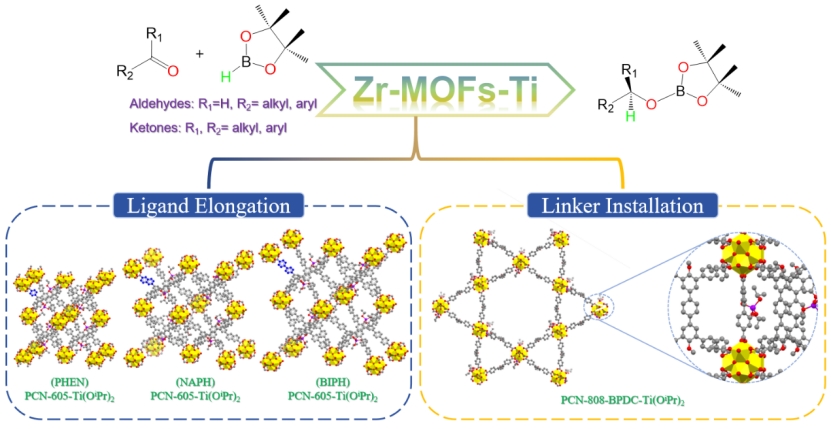
Figure 1. Schematic illustration ofthepore size engineering strategy of zirconium-based metal-organic frameworks (Zr-MOFs) forthehydroboration of large-size carbonyl substrates.
Integrating single-site metal catalytic centers into zirconium-based metal-organic frameworks (Zr-MOFs) offers significant advantages in catalytic recycling, product separation, and mechanistic analysis, highlighting their great value in heterogeneous catalysis. However, when these sites occupy the pores or channels, mass transfer efficiency and catalytic performance often suffer, especially in the hydroboration of carbonyl compounds (particularly bulky substrates). To address this challenge, this study innovatively synthesized three microporous single-site titanium (IV)-embedded Zr-MOFs with progressively elongated ligand arms, achieving precise pore size regulation at 9.04 Å, 10.12 Å, and 11.18 Å, as illustrated in the pore engineering scheme (Figure 1). Using eight carbonyl compounds of varying sizes and four even larger substrates for systematic catalytic performance evaluation, the results indicated that pore size regulation improved catalytic efficiency but still fell short of optimal performance. Subsequently, the research strategy shifted to anchoring single-site titanium (IV) centers via linear dicarboxylate ligands within the coordination unsaturated windows of mesoporous Zr-MOFs. The resulting catalyst exhibited excellent catalytic efficiency (exceeding 90% in all cases) while preserving the intrinsic mesoporous structure of the Zr-MOF (with a pore size of approximately 21.73 Å). This study provides critical guidance for future research on MOF structural design and catalytic optimization, opening new avenues in the field of heterogeneous catalysis.
Associate Professor Wang Yufen from TNU is the first corresponding author of this paper. The graduate students Liu Mingwu and Lin Hai'an, whom she supervised, are co-first authors. TNU is the first affiliation. Professor Li Dejun from TNU, Researcher Pang Jiandong from Nankai University, and Researcher Shi Wenxiong from Tianjin University of Technology are co-corresponding authors. This work was supported by the National Natural Science Foundation of China (Grant Nos. 22201137 and 22371137).
Article link: http://engine.scichina.com/doi/10.1007/s40843-025-3995-6
By He Jierui



 TNU is the only one of its kind in Tianjin that focuses on training high-quality teachers for basic education. It has rich educational resources, excellent facilities and equipment, a strong humanistic spirit, a beautiful and elegant environment.
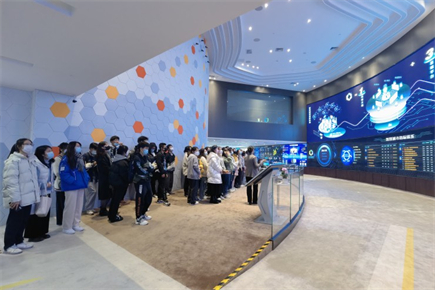 TNU has a complete range of disciplines and has outstanding advantages in its majors and has made significant achievements in cultivating talents.
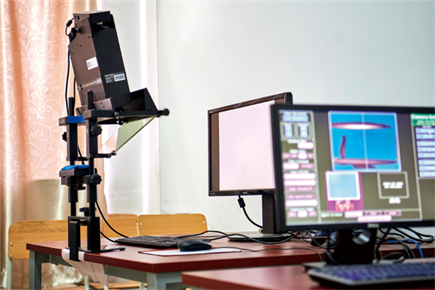 TNU has a strong research capacity with abundant high-quality research practice bases. They have been approved for over 300 national-level projects and won numerous national awards for outstanding achievements.
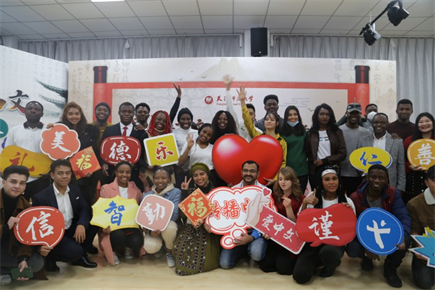 Read all of our latest news and opinion articles, and find out about our upcoming events which can enrich your life at TNU.
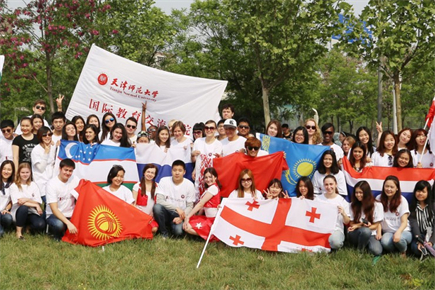 TNU adheres to open education and conducts extensive international exchanges and cooperation. It proactively connects the Belt and Road Initiative, and actively serves the national strategy of "Chinese culture going global".
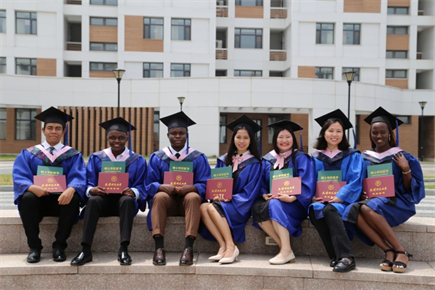 TNU cooperates with countries including Russia, Japan, and South Korea to build four Sino-foreign cooperative education projects, and its scale of international student training ranks among the top in Tianjin.
 TNU adheres to open education and conducts extensive international exchanges and cooperation. It proactively connects the Belt and Road Initiative.