A research paper titled "To facilitate consumer reviews or not? The role of capacity constraint" by the research group led by Associate Professor Xue Musen from the School of Management at Tianjin Normal University (TNU) has been published in the journal Information & Management. This study was supported by the Tianjin Philosophy and Social Science Planning Project.
The paper points out that, in a dual-channel structure, consumer reviews can significantly influence product channel demand and capacity allocation. Given that existing research has overlooked the impact of capacity constraints on consumer review strategies, this study aims to explore how capacity limitations affect the preferences of supply chain members regarding consumer review strategies (specifically, deterrence versus facilitation strategies). The findings indicate that preferences for consumer review strategies depend on the level of capacity constraints and consumers' quality perceptions, which are updated based on online reviews. Notably, the study reveals that when a supplier faces a moderate capacity level and online reviews generate a negative perception of product quality, adopting a facilitation strategy for consumer reviews through the direct channel may become the supplier's optimal choice. The results also demonstrate that capacity constraints play a pivotal role in aligning the preferences of supply chain members regarding consumer review strategies. Specifically, under moderate capacity conditions where consumer reviews trigger lower quality perceptions, supply chain members tend to prefer a deterrence strategy. However, if the updated quality perception, though still at a relatively low level, remains within the "good" range, all parties tend to converge on a facilitation strategy. By constructing a dual-channel supply chain model, this study provides an in-depth analysis of the interaction mechanism between capacity constraints and consumer review strategies. Its conclusions challenge the conventional wisdom that "the more positive the reviews, the more proactive the strategy," revealing how capacity constraints reshape the dynamics between suppliers and retailers. The findings suggest that capacity is no longer merely a production boundary but an important lever for regulating information flow. Within a specific quality perception interval, moderate capacity can serve as a buffer, enabling originally competitive channel members to achieve coordination in their review management strategies, thereby optimizing the entire supply chain.
By He Jierui



 TNU is the only one of its kind in Tianjin that focuses on training high-quality teachers for basic education. It has rich educational resources, excellent facilities and equipment, a strong humanistic spirit, a beautiful and elegant environment.
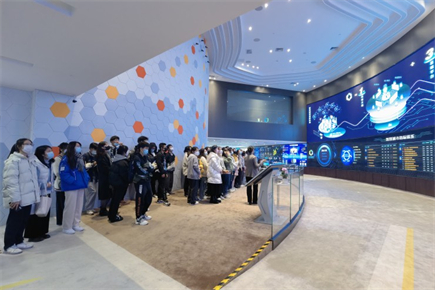 TNU has a complete range of disciplines and has outstanding advantages in its majors and has made significant achievements in cultivating talents.
 TNU has a strong research capacity with abundant high-quality research practice bases. They have been approved for over 300 national-level projects and won numerous national awards for outstanding achievements.
 Read all of our latest news and opinion articles, and find out about our upcoming events which can enrich your life at TNU.
 TNU adheres to open education and conducts extensive international exchanges and cooperation. It proactively connects the Belt and Road Initiative, and actively serves the national strategy of "Chinese culture going global".
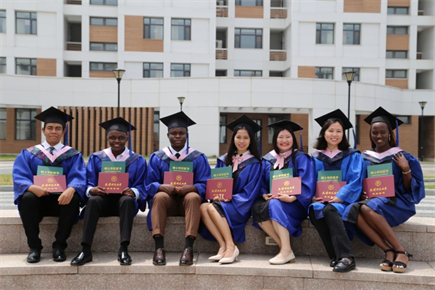 TNU cooperates with countries including Russia, Japan, and South Korea to build four Sino-foreign cooperative education projects, and its scale of international student training ranks among the top in Tianjin.
 TNU adheres to open education and conducts extensive international exchanges and cooperation. It proactively connects the Belt and Road Initiative.