Published in Educational Psychology Review in December 2024
Li Wenjing, Faculty of Psychology, Tianjin Normal University
This achievement won the Third Prize of the 19th Tianjin Social Science Excellence Achievement Award.
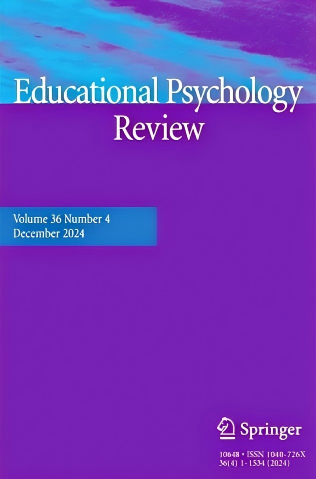
Achievement overview:
(1) Research background and main content: With the deepening digital transformation of education, online learning faces challenges such as weakened teacher roles and lack of social interaction, which easily lead to distracted attention, increased cognitive load and reduced learning motivation among learners. Although onscreen instructors (real teachers or virtual agents) with gestures have become a common response strategy, their actual effects and mechanisms remain controversial. To systematically answer this question, this study adopted a three-level meta-analysis method, integrating 83 empirical studies (662 effect sizes) from six authoritative databases including Web of Science (as of March 2024). The research focused on the role of onscreen instructors' gestures in multimedia learning, assessing their impacts on knowledge retention and transfer, cognitive load, social perception, and eye-tracking indicators (fixation duration and frequency).
The research drew three core conclusions: ①Gestures significantly improve learning outcomes, confirming their embodied cognitive value; ②The promoting effect is particularly prominent in four scenarios: when using deictic, metaphorical or mixed gestures; when there is no instructor image in the control group; when learners learn at their own pace; and when the course duration is long;③Gestures optimize the learning process through dual mechanisms of "guiding attention" (cognitive path) and "enhancing social presence" (affective path).
(2) Innovation of the research: The innovation of this study is reflected in four dimensions.①Methodological innovation: Taking the lead in applying the three-level meta-analysis model to more accurately handle the dependence and heterogeneity of effect sizes, improving the robustness of statistical conclusions; ②Content innovation: Including both real teachers and virtual agents as instructors, and expanding the literature to March 2024 to enhance the comprehensiveness and timeliness of the conclusions; ③Indicator innovation: Introducing eye-tracking data to construct a three-dimensional evaluation system of "learning perception - attention allocation - learning performance", revealing the real-time cognitive process of gestures; ④Theoretical innovation: Integrating the Signaling Principle, Cognitive Theory of Multimedia Learning and Social Agency Theory to propose a "cognitive-affective dual-path model", providing a new perspective for understanding the mechanism of instructors' roles.
(3) Positive impacts after publication:①Academic impact: Supported the approval of one National Education Science Planning Youth Project, facilitated the conclusion of one National Natural Science Foundation project, and one National Natural Science Foundation General Program is ongoing; ②Social service impact: A policy advisory report was adopted by the Information Office of the Tianjin Municipal Party Committee General Office, reflecting its decision-making reference value; ③Communication impact: Covered by the Office of Social Sciences at Tianjin Normal University and the WeChat public account "Meta-analysis", expanding public influence.
By He Jierui



 TNU is the only one of its kind in Tianjin that focuses on training high-quality teachers for basic education. It has rich educational resources, excellent facilities and equipment, a strong humanistic spirit, a beautiful and elegant environment.
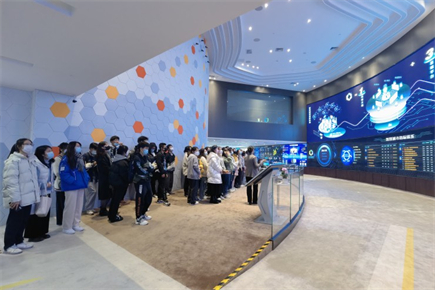 TNU has a complete range of disciplines and has outstanding advantages in its majors and has made significant achievements in cultivating talents.
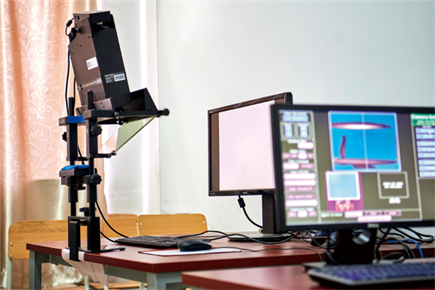 TNU has a strong research capacity with abundant high-quality research practice bases. They have been approved for over 300 national-level projects and won numerous national awards for outstanding achievements.
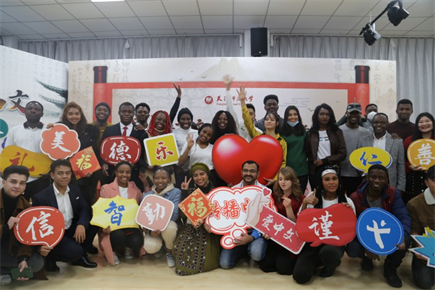 Read all of our latest news and opinion articles, and find out about our upcoming events which can enrich your life at TNU.
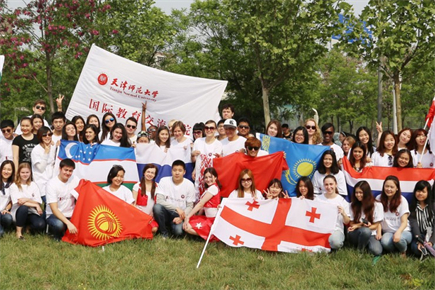 TNU adheres to open education and conducts extensive international exchanges and cooperation. It proactively connects the Belt and Road Initiative, and actively serves the national strategy of "Chinese culture going global".
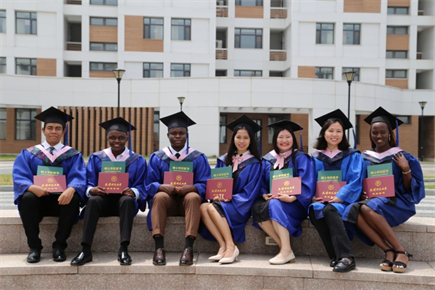 TNU cooperates with countries including Russia, Japan, and South Korea to build four Sino-foreign cooperative education projects, and its scale of international student training ranks among the top in Tianjin.
 TNU adheres to open education and conducts extensive international exchanges and cooperation. It proactively connects the Belt and Road Initiative.