Dr. Sun Chang, a faculty member of the School of Electronic and Communication Engineering and Artificial Intelligence at Tianjin Normal University (TNU), has published a paper as the first author titled "DCGCN: Dual-channel Graph Convolutional Network-based Drug-target Interactions Prediction Method with 3D Molecular Structure" in the Journal of Chemical Information and Modeling.
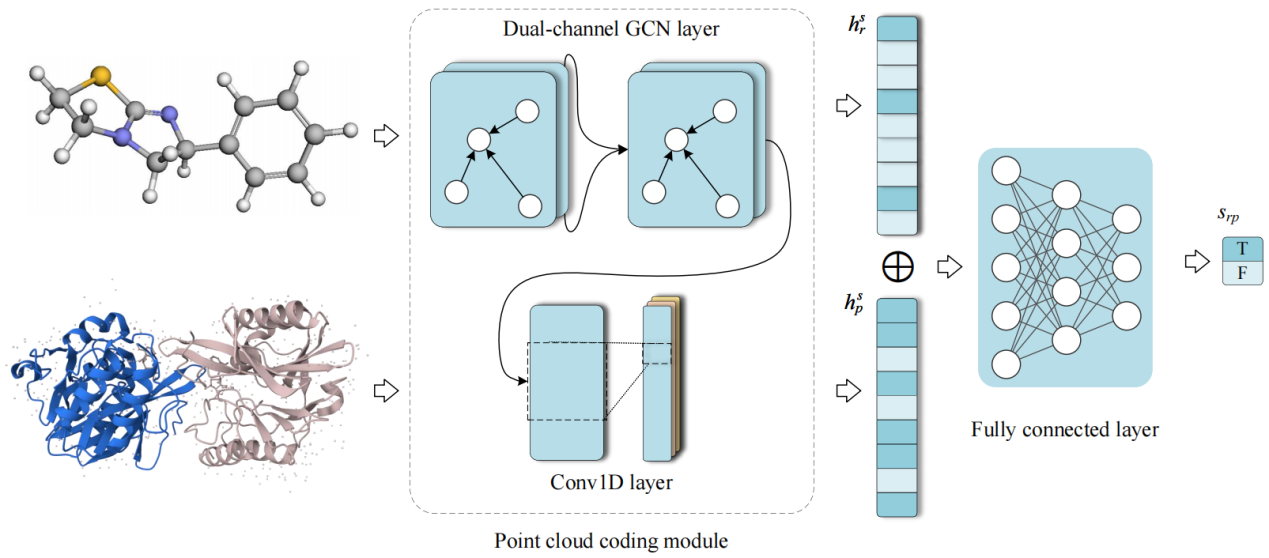
Investigating drug-target interactions (DTIs) is crucial for drug discovery. Most current methods for predicting DTIs rely solely on linear molecular representations, such as SMILES strings or amino acid sequences. However, these linear features fail to adequately capture molecular substructures or the relative positions of atoms. Although some approaches have begun to utilize two-dimensional molecular structures (e.g., bond-line formulas or atomic graphs), they still cannot fully represent a molecule's chemical architecture. To address this, the paper proposes DCGCN, a novel DTI prediction method based on three-dimensional (3D) molecular structure. DCGCN decomposes a molecule's 3D point cloud data into three components: atomic sequence, atomic connectivity, and distance graph. This approach enables the model to better learn the molecular composition of drugs and targets, as well as the connectivity and spatial distances between atoms or amino acid residues.
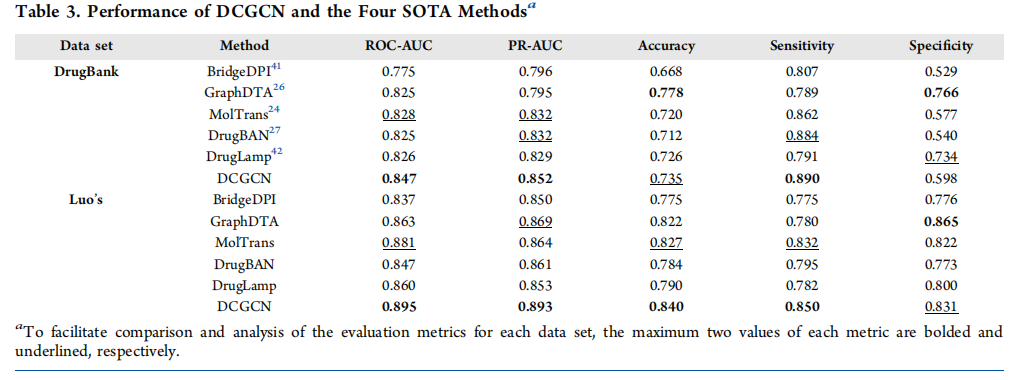
Experimental results on two public datasets demonstrate that DCGCN outperforms several state-of-the-art DTI prediction methods in overall performance. This superiority can be attributed to the fact that 3D molecular structure provides a more comprehensive representation of molecular properties than linear representations. Results from ablation studies confirm that 3D structural information offers more valuable insights. Furthermore, DCGCN's strong performance in cold-start settings validates its effectiveness in identifying novel uses for existing drugs and targets.
A case study shows that DCGCN can leverage known DTIs to identify potential new interactions by comparing the chemical structures and interaction patterns of candidate drugs with those of known ligands. Therefore, DCGCN serves as a practical tool to help biologists screen reliable drug-target candidates, improve the efficiency of biological validation experiments, and accelerate drug development.
Dr. Sun Chang is the first author of the paper, and TNU is the primary affiliation. This research was completed in collaboration with researchers from TNU and Tianjin Fifth Central Hospital. The work was supported by the Young Scientists Fund of the National Natural Science Foundation of China (Grant No. 62401392).
Article Links: https://pubs.acs.org/doi/full/10.1021/acs.jcim.5c01012
By He Jierui



 TNU is the only one of its kind in Tianjin that focuses on training high-quality teachers for basic education. It has rich educational resources, excellent facilities and equipment, a strong humanistic spirit, a beautiful and elegant environment.
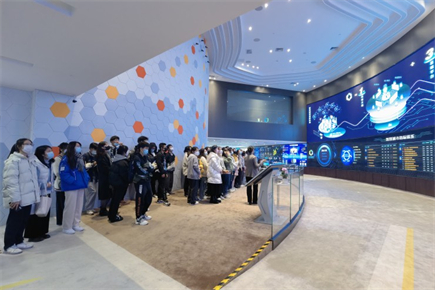 TNU has a complete range of disciplines and has outstanding advantages in its majors and has made significant achievements in cultivating talents.
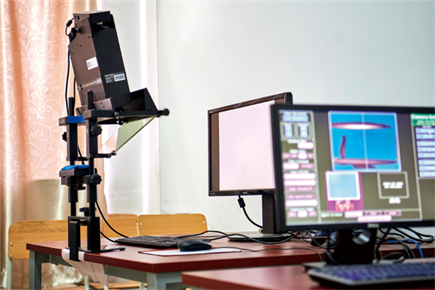 TNU has a strong research capacity with abundant high-quality research practice bases. They have been approved for over 300 national-level projects and won numerous national awards for outstanding achievements.
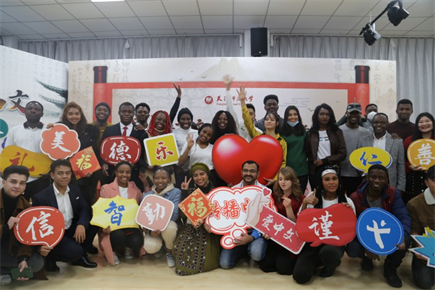 Read all of our latest news and opinion articles, and find out about our upcoming events which can enrich your life at TNU.
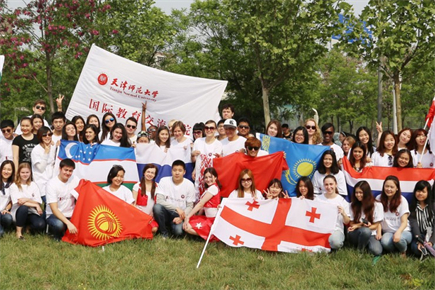 TNU adheres to open education and conducts extensive international exchanges and cooperation. It proactively connects the Belt and Road Initiative, and actively serves the national strategy of "Chinese culture going global".
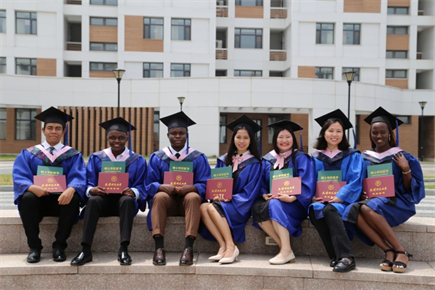 TNU cooperates with countries including Russia, Japan, and South Korea to build four Sino-foreign cooperative education projects, and its scale of international student training ranks among the top in Tianjin.
 TNU adheres to open education and conducts extensive international exchanges and cooperation. It proactively connects the Belt and Road Initiative.