The paper "The relationship between perceived stress and night eating moderated by personality: Cognitive emotion regulation as a mediator," completed by the research team led by Associate Professor Liu Tuo from the Faculty of Psychology at Tianjin Normal University (TNU), has been published in Appetite. Master's student Li Manyuan served as the first author, with Associate Professor Liu Tuo as the corresponding author. The research was supported by the Graduate Research Innovation Program of TNU.
With the widespread use of the internet and the convenience of food delivery services, nocturnal eating behavior has become increasingly common. However, such behavior not only increases the risks of obesity and metabolic disorders but may also be closely linked to mental health. Particularly when individuals experience stress, night eating may emerge as a coping mechanism. This study employed the Night Eating Questionnaire (NEQ), Perceived Stress Scale (PSS), Cognitive Emotion Regulation Questionnaire (CERQ), and Chinese Big Five Personality Inventory (CBF-PI-B-15) to investigate the relationship between perceived stress and night eating behavior, as well as the roles of cognitive emotion regulation strategies and personality traits in this process.
Results revealed that perceived stress significantly and positively predicted night eating behavior (b = 0.392, p < 0.01). The mediating effect of maladaptive cognitive emotion regulation strategies was significant, with the product of the path coefficients (b₁×b₂= 0.264, 95% CI [0.198, 0.334]), where b₁ denotes the path from stress to maladaptive regulation and b₂ denotes the path from maladaptive regulation to night eating. Furthermore, the extraversion dimension of personality negatively moderated the association between maladaptive cognitive emotion regulation and night eating behavior (b = -0.422, p < 0.05). Network analysis further identified that the catastrophizing dimension of maladaptive emotion regulation demonstrated the highest strength and closeness centrality (1.107 and 0.022, respectively), followed by the nervousness dimension of perceived stress (1.054 and 0.020). Connections between perceived stress and night eating were primarily established through the catastrophizing and blaming-others dimensions of maladaptive emotion regulation.
The study indicates that individuals with high perceived stress tend to employ more maladaptive cognitive emotion regulation strategies, leading to increased night eating behavior. Extraversion serves as a protective personality factor that weakens the association between maladaptive regulation strategies and night eating. Thus, this research further clarifies the structural relationships among these four factors, enhancing understanding of how individuals adjust coping strategies when facing stress and providing insights for tailored mental health interventions.
By He Jierui



 TNU is the only one of its kind in Tianjin that focuses on training high-quality teachers for basic education. It has rich educational resources, excellent facilities and equipment, a strong humanistic spirit, a beautiful and elegant environment.
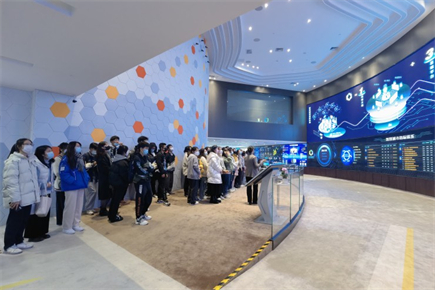 TNU has a complete range of disciplines and has outstanding advantages in its majors and has made significant achievements in cultivating talents.
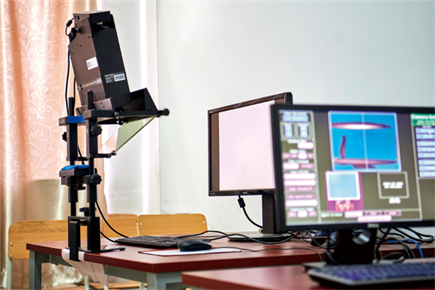 TNU has a strong research capacity with abundant high-quality research practice bases. They have been approved for over 300 national-level projects and won numerous national awards for outstanding achievements.
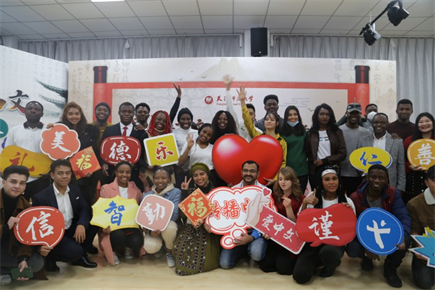 Read all of our latest news and opinion articles, and find out about our upcoming events which can enrich your life at TNU.
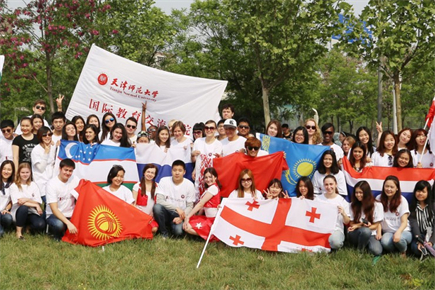 TNU adheres to open education and conducts extensive international exchanges and cooperation. It proactively connects the Belt and Road Initiative, and actively serves the national strategy of "Chinese culture going global".
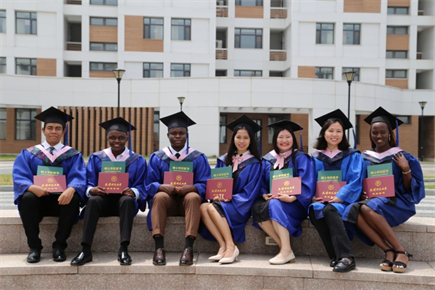 TNU cooperates with countries including Russia, Japan, and South Korea to build four Sino-foreign cooperative education projects, and its scale of international student training ranks among the top in Tianjin.
 TNU adheres to open education and conducts extensive international exchanges and cooperation. It proactively connects the Belt and Road Initiative.