A research team led by Associate Professor Wu Xia from the Faculty of Psychology at Tianjin Normal University (TNU) has published a paper titled "How category frameworks shape the pre-activation of attentional templates: Evidence from high-resolution SSVEPs" in the International Journal of Psychophysiology. The research team members include graduate students Ling Xin, Su Jiahui, and Miao Zhiwei, as well as Dr. Jiang Yunpeng, with Associate Professor Wu Xia serving as the corresponding author.
Leveraging steady-state visual evoked potential (SSVEP) technology, the study reveals, with millisecond temporal resolution, how different category frameworks influence the pre-activation patterns of attentional templates. This provides a critical breakthrough in understanding the neural mechanisms underlying visual search. The research focuses on a core issue in visual cognition: how three types of category frameworks—prototype, semantic, and strategic—affect the temporal dynamics and neural patterns of attentional template pre-activation.
By recruiting university students as participants and combining electroencephalography (EEG) with SSVEP technology, alongside multivariate pattern analysis (MVPA), the team systematically investigated behavioral performance and neural activity characteristics during visual search under different category frameworks. The results showed that visual search efficiency was optimal under the prototype framework, with the shortest reaction times and highest accuracy. During the pre-activation phase, the prototype framework was activated earliest (pre-search interval: −1808 to −1562 ms), followed by the semantic framework (pre-search interval: −1460 to −1396 ms), and the strategic framework last (pre-search interval: −359 to −28 ms). Moreover, significant differences in neural activity patterns were observed across the three frameworks during the visual search phase, though no differences were found in the N2pc and CDA components.These findings indicate that category frameworks influence visual search performance by modulating the temporal course of pre-activation, with each framework relying on distinct neural mechanisms to guide attention.
This study is the first to systematically compare the pre-activation differences of attentional templates across three category frameworks at millisecond resolution, filling a gap in temporal dynamics research in this field and clarifying the mechanisms linking category frameworks to visual search efficiency. The results not only deepen the understanding of attentional template regulation but also offer theoretical foundations and practical insights for attention training in education and visual guidance optimization in human-computer interaction design.
By He Jierui



 TNU is the only one of its kind in Tianjin that focuses on training high-quality teachers for basic education. It has rich educational resources, excellent facilities and equipment, a strong humanistic spirit, a beautiful and elegant environment.
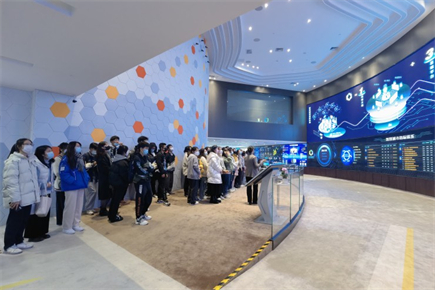 TNU has a complete range of disciplines and has outstanding advantages in its majors and has made significant achievements in cultivating talents.
 TNU has a strong research capacity with abundant high-quality research practice bases. They have been approved for over 300 national-level projects and won numerous national awards for outstanding achievements.
 Read all of our latest news and opinion articles, and find out about our upcoming events which can enrich your life at TNU.
 TNU adheres to open education and conducts extensive international exchanges and cooperation. It proactively connects the Belt and Road Initiative, and actively serves the national strategy of "Chinese culture going global".
 TNU cooperates with countries including Russia, Japan, and South Korea to build four Sino-foreign cooperative education projects, and its scale of international student training ranks among the top in Tianjin.
 TNU adheres to open education and conducts extensive international exchanges and cooperation. It proactively connects the Belt and Road Initiative.